Checklist
What gym members check before they join
Seven things people look for on a gym or studio website before they visit, shown on FitArcadia, a concept site we built. A checklist for gym owners.
Before anyone walks into a gym, they have usually looked it up on their phone. They want a handful of answers quickly, and if the site makes them hunt, the next gym in the results is one tap away.
This is the checklist we build gym and studio websites around. The examples come from FitArcadia, a concept studio site we designed and built to put these ideas into practice. It is a demonstration, not a real gym, and its results page is clearly marked as sample content.
1. The price, on the page
The most common question is the one most gym sites avoid. "Prices on request" and "enquire for membership options" sound like there is something to hide, and they turn a quick decision into a phone call.
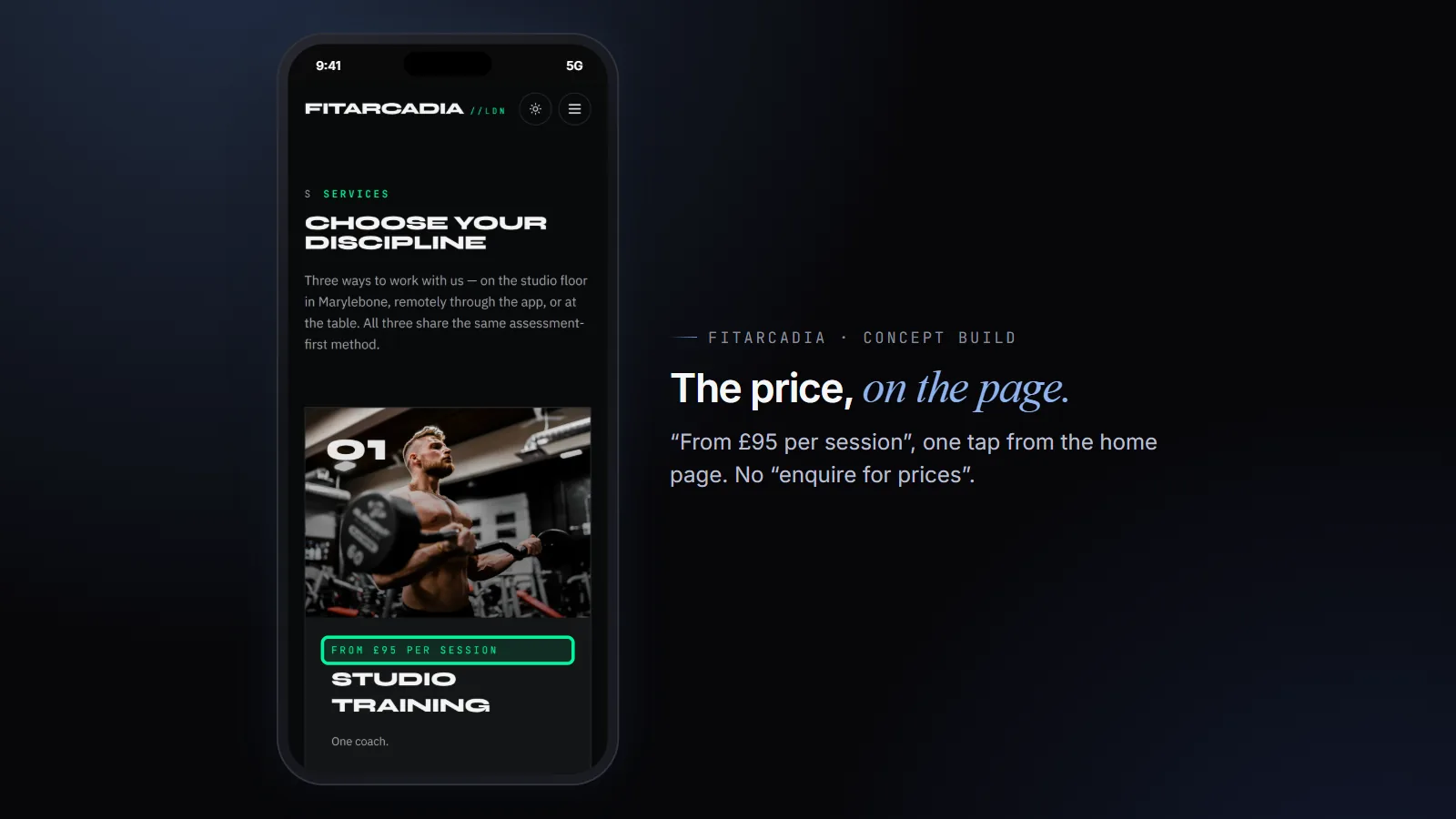
You do not have to list every package. A "from" price does the job: FitArcadia shows "from £95 per session" for studio training and "from £180 per month" for online coaching, one tap from the home page.
2. Who it is for
People join when they can see themselves there. A complete beginner and a competitive athlete want very different things from the same gym, and both want to know they will not feel out of place.
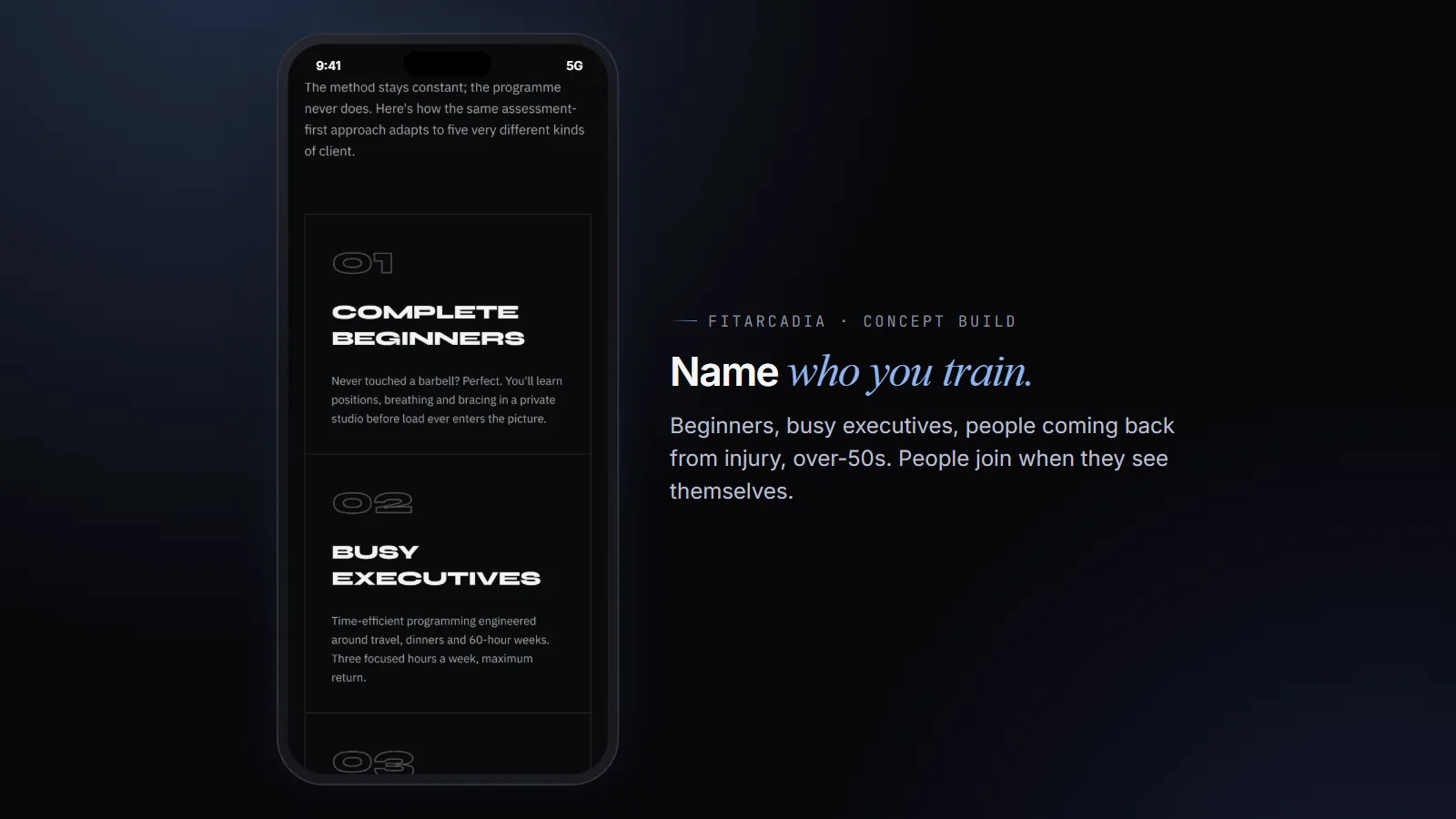
Name the people you train and say what each of them gets. FitArcadia has a page for exactly this: complete beginners, busy executives, competitive athletes, people coming back from injury, and over-50s.
3. What happens first
The first visit is the scariest part. Say exactly what it is: how long, what you do, whether they need to bring anything, and whether it commits them to anything. FitArcadia's home page puts it plainly: the first assessment is "a conversation, not a commitment".
4. A short enquiry
A twelve-field form asks for a commitment before you have earned one. Ask for what you need to reply, and nothing else.
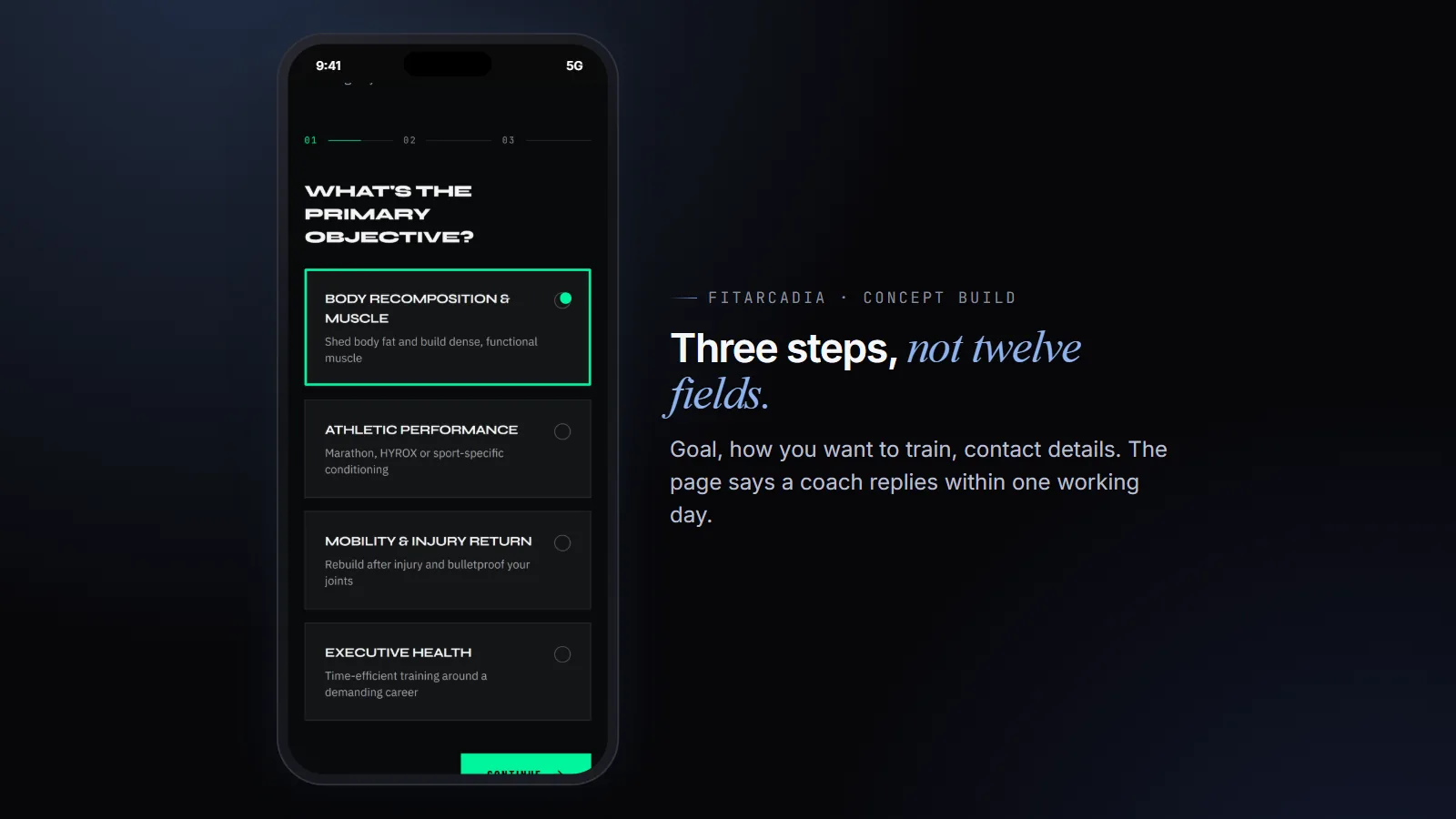
FitArcadia's enquiry is three steps: pick a goal, pick how you want to train, leave your details. It also says when you will hear back, which is within one working day.
5. Hours and location, in one tap
Opening hours, the address, a map link and whether there is parking. These belong at the foot of every page, not on a contact page three clicks away, and the phone number should call when it is tapped.
6. Proof that is real
Photos of your actual space, your actual coaches, and stories from members who have agreed to share them. Stock photos of models in a gym you do not own are easy to spot, and made-up reviews are worse than none.
If you do not have much yet, one honest story with a name and a photo is enough to start.
7. It works on a phone first
Almost everything above happens on a phone, often with one hand. Big buttons, short pages, nothing hidden behind tiny menus, and pages that load quickly on mobile data. Check it on your own phone, not just the designer's laptop.
The two-minute test
Open your own site on your phone and time yourself finding three things: the price, the timetable or availability, and how to book a first session. If any of them takes longer than a few seconds, a new member probably gave up there.
If you would like us to run the test for you, send us your gym's website and we will tell you what we find. You can also see how FitArcadia was built in the case study.